iRobot, maker of the beloved Roomba robotic vacuum, has filed for bankruptcy and sold itself to Chinese supplier Shenzhen Picea.
For Roomba owners and companies that work with iRobot, the news may feel sudden. For us and our clients, it was not.
We have been tracking iRobot’s deterioration since 2021.
FHR
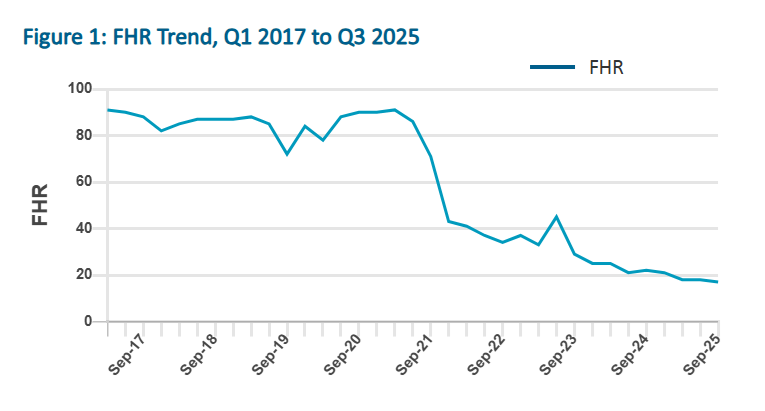
Today, iRobot is rated Very High Risk with a 17 out of 100 rating on our financial health scale, what we call the FHR. The company has been rated High Risk since April 2022, following a sharp decline that began in the second half of 2021.
For those watching, something very interesting happened from 2020 to the end of 2021: iRobot’s FHR fell by more than half, dropping from a Very Low Risk score of 90 to 43, putting it on the brink of High Risk territory.
For any risk manager, this would be the time to start asking serious questions.
The drivers were clear. Earnings deteriorated rapidly as lower-cost Chinese competitors flooded the market with robot vacuums. At the same time, global supply chain disruptions severely constrained operations. iRobot relies heavily on integrated circuit components, and the global semiconductor shortage limited its ability to meet demand. In Q4 2021 alone, chip shortages and shipping delays prevented the fulfillment of more than $35 million in orders.
Why Financial Health Matters
iRobot’s story illustrates a critical reality. In periods of global shortages and macroeconomic volatility, even companies once considered Very Low Risk can falter. Constant monitoring is essential, and that is precisely what the FHR is designed to provide.
While the FHR is an indicator for default risk, it also measures the firm’s efficiency, competitiveness, and operational resilience. Companies with poor financial health often struggle to maintain quality, meet delivery timelines, or invest in cybersecurity and equipment maintenance. In short, they become unreliable.
Our research shows that companies with poor financial health are:
- 2.0x more likely to experience quality issues
- 2.6x more likely to experience delivery failures
Both outcomes can trigger costly disruptions for customers, particularly in industries such as technology that depend on critical suppliers across semiconductors, energy infrastructure, software, and battery materials.
How Did We Get Here?
A dip in sales alone does not cause bankruptcy. Failure happens when multiple pressures converge, which is exactly what the Financial Dialogue Report is built to assess.
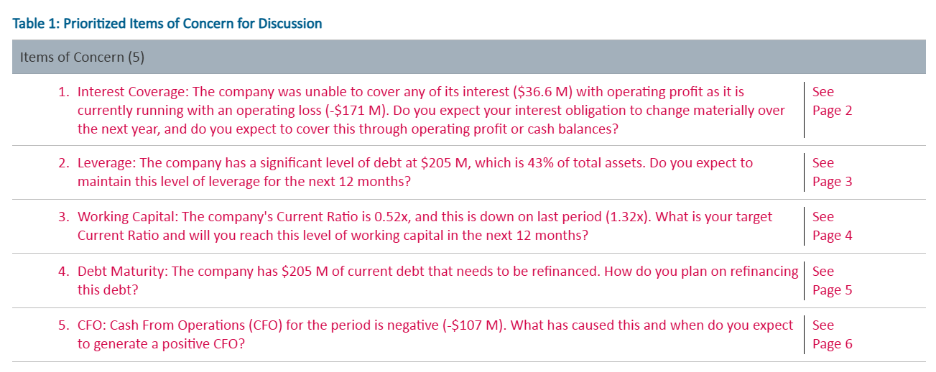
In iRobot’s case, the latest report, released on November 11, 2025, told the end of the story. The company was out of cash, and its entire $205 million debt balance was coming due.
What Risk Managers Should Be Doing
iRobot is a textbook example of how macroeconomic shocks can overwhelm even the strongest companies. Supply chain professionals who leverage supplier financial monitoring tools will be able to withstand external pressures with alacrity.
Risk managers should consider the following:
- Look beyond surface-level indicators
Traditional signals like trade payment data often lag or fail to capture early deterioration. In iRobot’s case, those indicators would have surfaced the risk too late. - Focus on financial fundamentals
RapidRatings centers on rigorous financial statement analysis. This approach allowed us to identify iRobot’s decline early and give clients the time needed to mitigate exposure.
When others miss the warning signs, we don’t. Because when it comes to risk, financial health is the first and most reliable line of defense.
Don’t wait for the headlines to learn your supplier is in crisis. The data is already there. Are you watching?